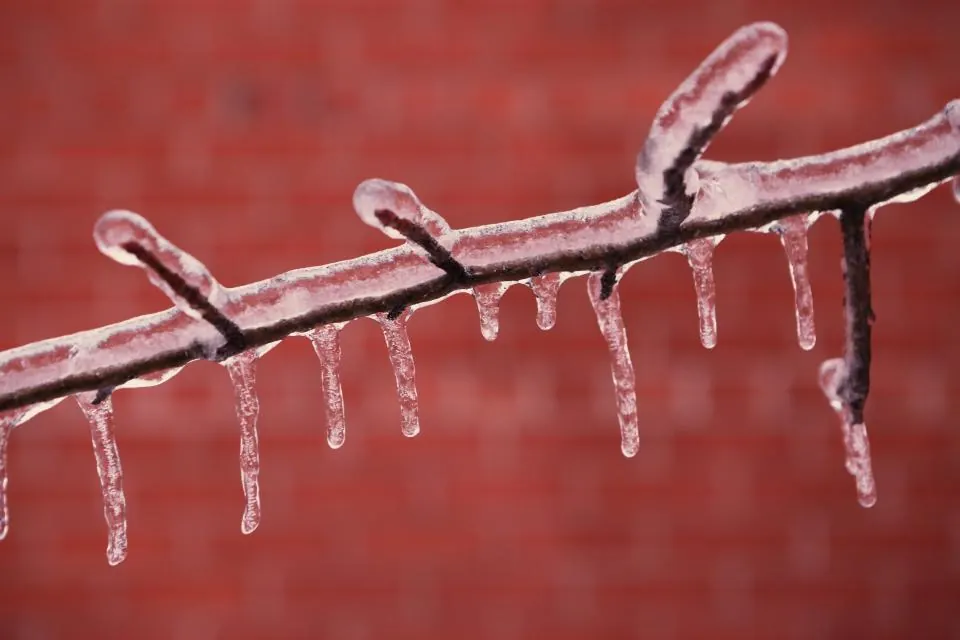
What ice does to a Mississippi property
Ice storms don’t come often in Mississippi, but when they do the damage is wide. The February 1994 ice storm coated North Mississippi in heavy ice, snapping pines and hardwoods and bringing down power lines across the region. In February 2021, a statewide freeze left many homes with burst pipes and water damage, and a hard freeze in December 2022 brought another round of plumbing claims.
Roughly two-thirds of the state is forest, and many homes in Oxford, Tupelo, Starkville, Columbus and Corinth sit under mature loblolly pines, oaks and pecans. When ice loads those limbs, a single night can produce roof punctures, crushed fences, damaged cars and blocked driveways. Ice also builds up on roofs and gutters, and cold snaps freeze plumbing. Each of those problems is handled a little differently under a typical homeowners policy.
How tree removal limits usually work
Tree claims surprise many owners because the policy may pay the full cost to repair the roof a tree hit but only a limited amount to remove the tree itself.
The common pattern
Many homeowners forms cap tree removal at a set amount per tree and per occurrence, often around $500 per tree and $1,000 per occurrence on many policies. Removal is often covered only when the tree falls on a covered structure, such as the house or a detached garage, or blocks a driveway or ramp. A tree that falls across the yard without hitting anything may not be covered at all.
What sits outside the removal limit
The damage the tree caused to the building is usually handled under the dwelling or other structures coverage, not the tree limit. That includes the roof, framing, gutters, siding and interior damage from rain that got in. Separating those costs clearly in the estimate matters, because lumping them together under “tree removal” can shrink a claim.
Illustrative example: an ice-laden oak falls on a garage. Crane and tree work cost $3,200, but the policy’s tree removal limit is $500. The roof, rafters and gutters on the garage are a separate repair, priced on their own line items under the coverage for that structure.
If an estimate shows one large tree line, ask the carrier to separate removal of the tree from removal of debris inside the structure and from repair of the structure itself. Policies often treat those differently.
Ice on roofs and gutters
Ice adds weight and blocks drainage. Common damage after an ice event includes:
- Gutters pulled loose or bent by ice weight and falling limbs
- Shingles cracked or torn by limbs and by ice sliding off steeper slopes
- Leaks where ice dams back water up under shingles at the eaves
- Damaged ridge vents, pipe boots and satellite mounts
- Sagging carports and porch roofs under ice load
Mississippi homes are rarely built with the ice and water shield found farther north, so ice-dam leaks can show up as ceiling stains days later. Photograph interior stains as soon as you see them and note the date. Whether the policy covers ice-dam leakage, collapse from weight of ice, or only damage from falling objects depends on the form, so read the covered perils section closely.
Frozen pipes and the water that follows
The February 2021 freeze showed how much damage a single split pipe can do in a few hours. Most homeowners policies cover sudden and accidental water discharge from a frozen pipe, but many add a condition: you must have kept the home heated, or drained the system and shut off the water if it was vacant. Rules on vacant homes and rentals can be strict.
To protect a freeze claim:
- Shut off the water and call a plumber right away; keep the invoice showing the cause.
- Photograph the broken pipe before it is replaced, and keep the piece if you can.
- Start drying quickly. Mold limits on many policies make delay costly.
- Document flooring, cabinets, drywall and contents in every affected room.
The pipe repair itself is sometimes excluded while the water damage it caused is covered. Read your policy, and see our water and plumbing loss appraisal page for how those claims are often valued.
Keeping winter claims organized
Ice events often knock out power for days, and many owners start cleanup by flashlight. Even so, a few habits help later. Note the date power went out and came back. Keep invoices from tree crews showing which trees were removed and what each one struck. Write down when you first saw each ceiling stain or drip, and when the plumber arrived. If several trees came down, sketch a simple map of the lot showing where each one fell and what it hit.
When the numbers don’t add up
Ice and freeze claims tend to produce disputes over a few recurring items: whether the roof needs replacement or spot repair, whether the tree limit was applied to costs that belong under dwelling coverage, how much drywall and flooring must be replaced, and whether undamaged materials need replacing so repairs match.
If your carrier accepted the claim but its estimate seems to miss items, a careful review is a good first step. Our ice storm and freeze appraisal and fallen tree claim appraisal services cover these losses, and owners in Tupelo and the rest of North Mississippi can start with a phone call. If the dispute is about coverage rather than price, talk to a Mississippi attorney.