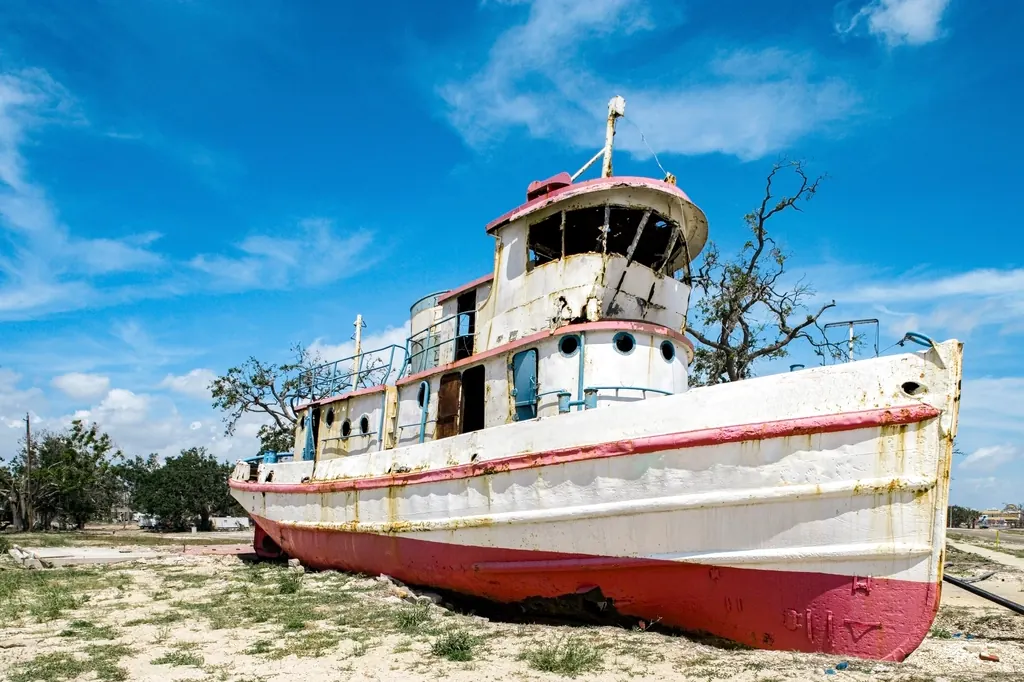
Why the Coast still argues about wind and water
When Hurricane Katrina came ashore on August 29, 2005, it brought catastrophic storm surge across Hancock, Harrison and Jackson counties. Waveland, Bay St. Louis, Pass Christian, Long Beach, Gulfport, Biloxi, Ocean Springs and Pascagoula all saw homes reduced to slabs. Hours before the water arrived, and far inland around Hattiesburg, Laurel and Meridian, the wind was doing its own damage.
That overlap created a problem that still shapes Coast claims today. A typical homeowners policy covers wind but excludes flood. Flood coverage, if the owner has it, usually comes through the National Flood Insurance Program with its own limits. When a house is gone, or gutted to the studs, someone has to decide how much of the loss came from wind and how much from water. Owners and carriers spent years arguing over that split, and many of the same arguments surface after every storm, from Isaac in 2012 to Zeta in 2020.
How anti-concurrent causation language enters the picture
Many homeowners policies include what is called an anti-concurrent causation clause. In general terms, it says that if an excluded cause such as flood contributes to a loss, the loss is excluded “regardless of any other cause or event contributing concurrently or in any sequence.” Carriers have pointed to that language to argue that when wind and surge both hit a house, the whole loss falls outside coverage.
Courts addressed these clauses in the years after Katrina. Broadly speaking, outcomes depended on the exact policy wording and the facts of each property, including what damage happened first and whether the wind damage could be separated from the water damage. We won’t summarize individual rulings here, because how any of them applies to your claim is a legal question. If your carrier is relying on this kind of clause, talk to a Mississippi attorney about your policy.
An appraiser can help put a number on damage. Whether a clause in your policy excludes part of that damage is a coverage question for the carrier, a Mississippi attorney and, if needed, a court.
Where appraisal fits in a wind-and-surge loss
Appraisal is built to answer one question: what is the amount of loss? On a split loss, that can still be very useful. If your carrier accepts that some of the damage came from wind but pays far less than you think that portion is worth, appraisal is often the right tool.
Questions an appraisal panel can usually take up
- The cost to repair or replace the roof, windows and siding the carrier agrees were damaged by wind
- The value of interior damage from rain entering through wind-created openings
- Quantities, unit prices, overhead and profit, and depreciation on the wind estimate
- In some cases, the dollar value of damage at different heights or areas of the building
Questions that usually belong somewhere else
Whether the policy covers a loss that both wind and flood contributed to, whether an exclusion applies, and whether the carrier acted in bad faith are not questions an appraisal panel decides. Mississippi recognizes a court-made bad-faith claim in some circumstances, but that is a matter for a Mississippi attorney, not an appraiser.
Building a wind record your carrier has to answer
Whatever path your claim takes, the strength of a wind position usually comes down to evidence gathered early. Before anything is cleaned up or torn out, try to capture:
- Water lines. Photograph the highest flood line on interior and exterior walls, with a tape measure in the shot. Damage well above that line points away from surge.
- Debris direction. Note which way fallen trees, fences and shingles lie. Wind tends to scatter debris in patterns that differ from the push and settling of moving water.
- Roof and upper-story damage. Missing shingles, lifted decking, broken upper windows and soffit loss are classic wind evidence.
- Timelines. Write down when the wind picked up, when you lost power, when water arrived and when it receded. Neighbors’ accounts and time-stamped phone video help.
- Weather data. Keep notes on reported wind speeds and surge heights near your address from public weather sources.
Our wind and water split estimator can help you organize this evidence by area and think through how a split might look before you talk to your carrier.
Split policies, MWUA and the flood side
In the six southernmost counties (Hancock, Harrison, Jackson, Pearl River, Stone and George) many owners carry a homeowners policy that excludes wind, a wind policy through the Mississippi Windstorm Underwriting Association, and a separate flood policy. That means one storm can produce three claims with three adjusters, three estimates and three sets of deadlines.
A few practical points:
- Report to every carrier promptly, even if you think one policy won’t pay.
- Ask each adjuster for a copy of the estimate and any photos or measurements they took.
- Watch for gaps where each carrier says the other cause did the damage.
- Flood claims under the NFIP have their own proof-of-loss and appeal rules, separate from an MWUA or homeowners appraisal clause.
A percentage named-storm deductible will usually apply to the wind side. Our guide to coast hurricane deductibles walks through that math.
Turning a Katrina lesson into a plan for the next storm
The biggest lesson from 2005 is that the record you build in the first weeks often matters more than anything that happens later. Owners who could show what the wind did, room by room and elevation by elevation, were in a far better position to argue about the amount.
If your carrier has accepted part of a wind loss and the dispute is about value, appraisal may be worth a look. If the carrier denies the wind portion entirely and relies on a flood exclusion, start with a Mississippi attorney. In either case, our hurricane and named-storm appraisal page explains how we handle Coast files, and you can talk to an appraiser about where your claim stands.